For many individuals facing tooth loss, deciding between All-on-4 dental implants and traditional dentures can feel overwhelming. Concerns often arise about which option will restore the appearance of a full, healthy smile and the comfort and function of natural teeth.
With advancements in dental technology, it is crucial to understand the choice of All-on-4 dental implants vs. dentures. These popular tooth replacement treatments offer distinct benefits tailored to various needs and lifestyles.
In the following sections, we will explore the biggest differences between these options, shedding light on materials, maintenance, costs, and overall suitability. This helps you make an informed decision that best suits your oral health needs and personal preferences.
What Are All-on-4 Dental Implants?
All-on-4 Implants are a modern dental option for replacing a whole set of upper or lower teeth using just four specially placed titanium implants. These implants hold a set of new teeth securely in place and are meant to bond with your jawbone, giving you a strong and lasting solution. They look and feel a lot like natural teeth, help you chew normally again, and stop your jawbone from shrinking over time.
Benefits of All-on-4 Dental Implants
- Longer Life Span and Stability. Unlike conventional dentures that can shift while eating or speaking, All-on-4 implants significantly reduce movement by anchoring directly to your jawbone. This stable foundation helps provide greater comfort and confidence in daily activities.
- Prevention of Bone Loss. With proper integration into the bone structure, All-on-4 implants help maintain and even promote bone health. This prevents ongoing bone loss typically seen with other tooth loss treatments like traditional dentures, which do not stop jawbone deterioration.
- Natural Aesthetics and Functionality. These implants closely replicate the appearance and function of natural teeth. You can choose from a wider variety of food choices without restrictions, including sticky foods and tough textures. As a full-mouth restoration solution, they also help restore your facial profile and contribute to a more youthful appearance.
- Minimal Maintenance. While proper maintenance is essential, the care for All-on-4 implants aligns with regular dental hygiene practices, such as brushing and flossing. There is no need for special soaking or extensive daily adjustments typically required for traditional dentures.
- High Success Rate. All-on-4 dental implants have high success rates and are effective even for patients with varying bone densities. They’re a reliable long-term procedure for full-arch restoration with success rates of 94.8% for patients and 98.1% for implants over five years and a prosthesis survival rate of 99.2% over ten years.
What Are Traditional Dentures?
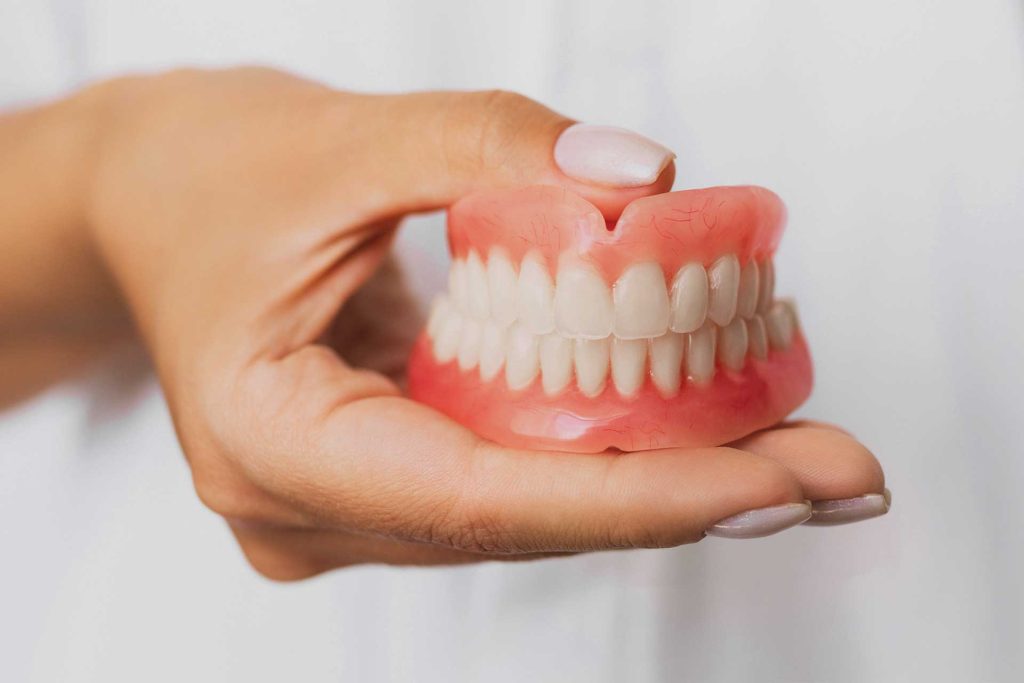
Traditional dentures are removable dental appliances made from acrylic resin, including an acrylic base resembling gum tissue and artificial teeth. They rest on the gums and may cover the roof of the mouth. While they improve appearance and functionality, they may not fully replicate the natural experience, often requiring adhesives to stay in place. Traditional dentures can be easily removed for cleaning and maintenance.
Benefits of Traditional Dentures
- Affordability. Traditional dentures are often more affordable than dental implants, which can have a significant initial cost. They are ideal for patients seeking tooth replacement solutions with fewer financial resources.
- Non-Invasive Procedure. Traditional dentures are a non-invasive method for tooth replacement since they do not require surgery. There is no need for complex implant placement or concerns about healing periods, making them accessible as a temporary or permanent prosthesis.
- Customizable and Removable. These removable dentures are a breeze to customize to fit your mouth perfectly. Since you can easily take them out, cleaning and adjusting them is simple, so they fit right in with your care habits and make maintenance a snap.
- Improved Appearance and Function. While they might not match implant dentures’ stability, they improve facial aesthetics by filling out the cheeks and lips, contributing to a more symmetrical look. Additionally, they restore basic oral functions such as chewing and speaking.
- Shorter Time to Completion. The treatment plan for traditional dentures often involves less time from the initial dental care routine consultation to completion. With no surgical recovery needed, the entire procedure, from fitting to receiving complete dentures, can be finalized in a matter of weeks.
A Quick Comparison of the Differences Between All-on-4 Dental Implants and Traditional Dentures
Feature | All-on-4 Dental Implants | Traditional Dentures |
Stability & Function | – Permanently fixed in the jaw – No slipping or shifting – Superior bite strength – Natural eating and speaking | – Removable – May slip during eating/speaking – Limited bite strength – Learning curve for eating/speaking |
Bone Health | – Preserves jawbone – Prevents facial sagging – Stimulates bone growth | – Gradual bone loss – Can lead to facial changes – No bone stimulation |
Comfort & Fit | – Feels like natural teeth – No adhesives needed – No palette coverage | – May cause sore spots – Requires adhesives – Covers the roof of the mouth |
Maintenance | – Brush like natural teeth – Regular dental checkups – No removal for cleaning | – Daily removal for cleaning – Soaking overnight – Regular adjustments needed |
Initial Cost | – More expensive – Can be covered by insurance | – Less expensive – Can be covered by insurance |
Long-Term Value | – Fewer replacements needed – Lower maintenance costs – Better long-term investment – Can last up to 25 years with proper care | – Regular replacements required – Ongoing adhesive costs – More frequent adjustments – Last up to 5-7 years with proper care |
Treatment Time | – Up to 8 months total process – Same-day temporary teeth – Surgical procedure required | – 3-6 weeks process – No surgery required – Multiple fittings needed |
Candidacy | – Requires adequate bone density – Good oral health needed – Some medical conditions may disqualify – May not be a good option for those smoking or not willing to quit | – Most patients qualify – Minimal health requirements – Good option for limited bone |
Factors to Consider When Choosing All-on-4 Dental Implants vs. Dentures
Comfort and Fit
All-on-4 dental implants and traditional dentures differ significantly in terms of comfort and stability. All-on-4 implants provide a natural, stable fit that offers a secure feel similar to natural teeth, as their fixed nature eliminates the risk of movement, enhancing overall comfort. In contrast, traditional dentures can sometimes shift, necessitating adhesives to maintain their position.
Durability and Maintenance
All-on-4 dental implants and regular dentures each have their own needs when it comes to how long they last and how you take care of them. All-on-4 implants serve as a permanent solution that can last a long time with proper care, needing minimal maintenance beyond regular oral hygiene practices. Conversely, traditional dentures often necessitate more upkeep, including regular soaking and cleaning.
Suitability
When choosing between All-on-4 dental implants and traditional dentures, you’ll want to think about factors like bone density, age, and overall dental health. People with strong bone density might find All-on-4 implants more beneficial due to their stability and durability. On the other hand, traditional dentures could be a better fit for those looking for a non-invasive option or those whose health conditions affect bone quality.
It’s important to remember that not everyone with tooth loss is a good candidate for implants.
Functionality
All-on-4 dental implants offer superior stability and chewing efficiency compared to conventional dentures. Anchored into the jawbone, they mimic natural teeth, allowing for a broader dietary range and eliminating movement during eating.
On the other hand, dentures, which rest on the gums, can shift and limit food choices, often needing adjustments. While well-fitted dentures support clear speech, changes in bone structure can lead to slippage, affecting confidence in speaking and laughing.
Cost and Investment
All-on-4 implants might cost more upfront compared to dentures, but they often make up for it with their durability and minimal maintenance over time. Dentures are usually cheaper at first, which can be appealing for a quick, affordable solution, but the costs can add up with ongoing adjustments and replacements.
As for insurance, it really depends on your plan. Some insurance might help out with dentures more than implants, so it’s worth checking what your coverage includes to see which option is more budget-friendly in the long run.
Surgical and Recovery Considerations
The All-on-4 treatment includes a surgical procedure to place the implants, followed by a recovery period generally lasting about three to six months as the implants integrate with the bone. This approach may not be ideal for everyone, especially those with surgical risks or certain medical conditions. In contrast, dentures are non-surgical and offer a less invasive alternative.
They are a good option for those who want an immediate and straightforward prosthetic solution without the recovery time that comes with surgical implants.
Implant-Supported Dentures vs.All-on-4 Implants
While both options offer more stability than traditional dentures, there are key differences to consider.
As mentioned, All-on-4 implants provide a non-removable solution using just four strategically placed implants per arch. In contrast, implant-supported dentures (also called snap-in dentures) are removable and typically require 2-6 implants to secure the denture in place.
The All-on-4 technique allows for fixed, smaller prosthetics that feel more like natural teeth. However, implant-supported dentures offer a middle-ground treatment, combining improved stability with the familiarity of removable dentures. They’re often more affordable than All-on-4 but still provide better function than traditional dentures.
Key difference:
- All-on-4. Permanently fixed, smaller prosthetic, no removal needed for cleaning.
- Implant-Supported Dentures. Removable for cleaning, larger prosthetic snaps into implants.
Enhance Your Quality of Life With Modern Tooth Replacement Options: Book Your Appointment Today!
Both All-on-4 dental implants and traditional dentures cater to individuals facing tooth loss, offering distinct advantages tailored to diverse needs. The choice between these options should align with personal goals, oral health conditions, and lifestyle preferences.
If you need guidance in choosing dentures vs. all-on-4, Smile Lake Anna is here to help. Our experienced dental team will evaluate your oral health needs and lifestyle preferences to recommend the best tooth replacement solution.
Contact us today for a comprehensive consultation. Let Smile Lake Anna guide you to a brighter, healthier future!